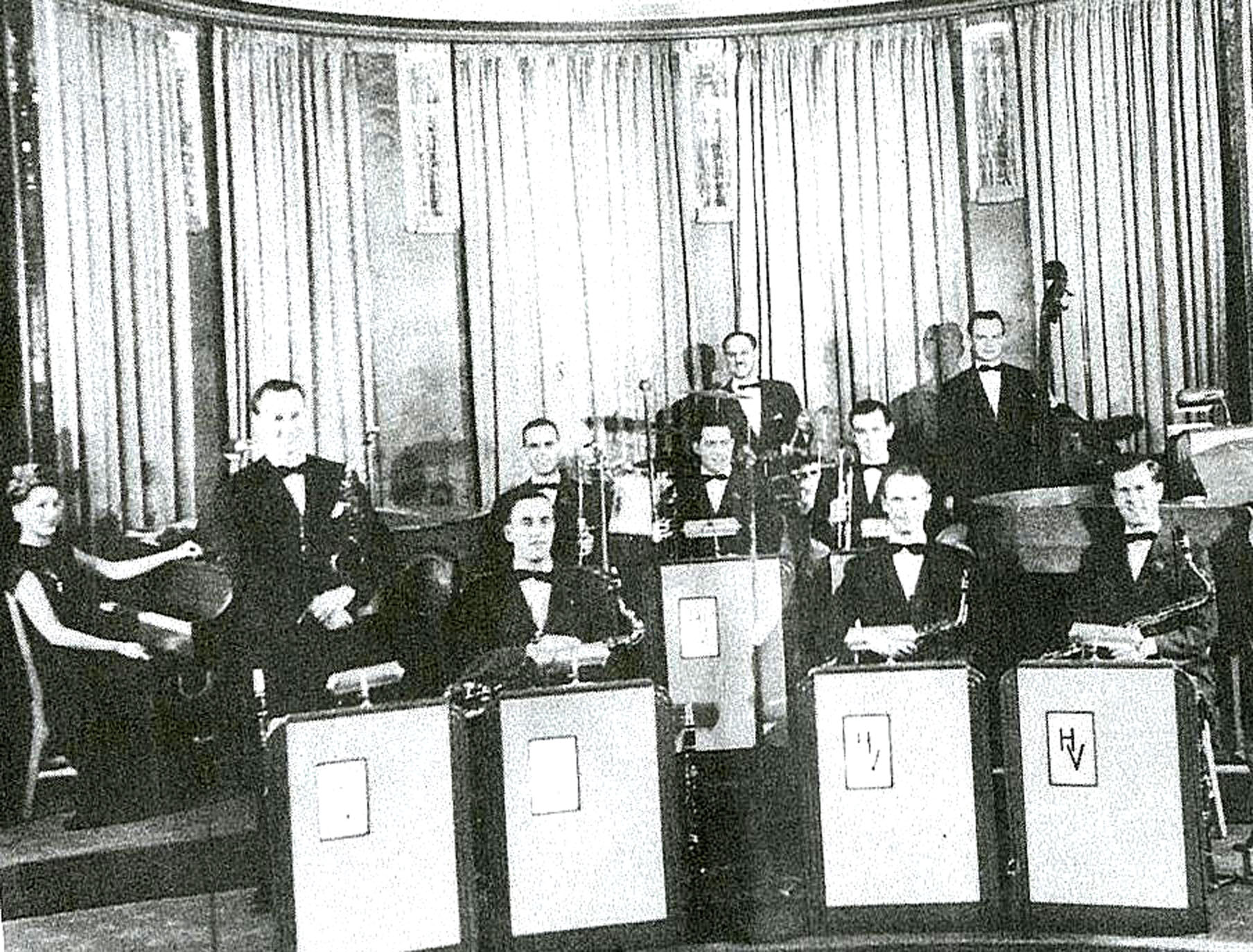
Ray turns professional at age 16. The lead is ill and he has to sight read a solo which Dal isn’t too happy about but he does just fine under pressure. Delamont embarrasses the band. The adjudicator gives them 100 points but Delamont will have none of it. He tells him any fool knows nothing is ever 100 percent but still wins the trophy. After fifteen years as a pro trumpet player Ray gives it all up. Instead, he goes to work in a box factory.
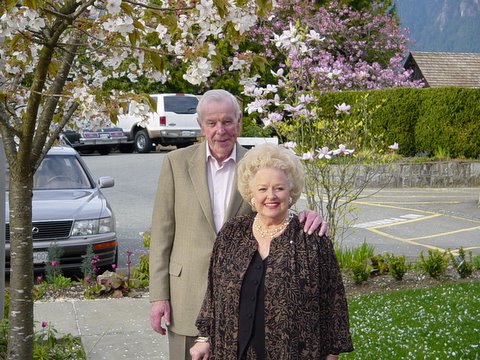
Ray works his way up through the company to become the CEO of MacMillan Bloedel Western Canada’s largest forest company. Both Ray and his wife still love music and are like two kids with the stereo turned up. Ray meets Jimmy on a board planning Arthur’s first reunion concert. Jimmy is more driven than Ray. Ray is more a family man. Jimmy invites Ray out on his boat and they become fast friends often playing duets on their trumpets and reminiscing. Ray’s wife dies. He strikes up a friendship with old friend songstress Juliette. They share stories of their pro music days back east in Toronto and New York. They are perfect for each other. Although they miss their mother, his kids see it is a match made in musical heaven.
Quotes from Ambassadors of Empire Season 2 Episode 2:
Jimmy Pattison: “Ray was ahead of me in the band but we did become very good friends. I got to know him through the band but not until the first reunion concert was held in 1963. Ray has a son and at least one daughter named Vicky.”
Jimmy Pattison: “He was a very special guy. He just passed away not too long ago. Here’s a guy who came out of the band, went to Toronto and played professional trumpet as a result of being in the Kitsilano Boys’ Band. Delamont raised us all basically in the music business. Ray was top drawer. He was so good! He was ahead of me so I never heard him play in the band but I would take him out on my boat and he and I would play the trumpet together. We would have dinner and bring along a group of people. Ray would play his trumpet and I would play mine. But I met him — back it up! The friendships that I made through the band meant a great deal to me. There is a bond there. Anyway, I would call Stan Smith. Ray Smith put a lot of effort into the band. I would say that Arthur Delamont relied on Ray Smith more than any other single person in his whole organization.”
Jimmy Pattison: “After Ray left the band, Delamont went to Ray Smith for reunions, advice or whatever. Ray Smith was a huge friend of Arthur Delamonts. Of all the people who went through the band, I would bet that Ray Smith would be in the top five people that meant something to Arthur Delamont.”
Juliette: “Oh yes! Ray and I met again after we both had finished our careers so to speak. But he did tell me a few stories. I remember him saying when he lived in Toronto he would often go down to New York in his uniform during the war and sit in with some of the top jazz bands of the day.”
Juliette: “I would say so! Arthur Delamont, boy there were a lot of good musicians who came through his band. His son Gordon wrote arrangements for me for awhile in Toronto. And Dal Richards came through the band. He is a good friend of mine you may know.”
Ray Smith: “I was told years ago, that good luck is when preparation meets opportunity.”
Ray Smith: “Being in the band meant hard work, discipline and high standards. Delamont’s standards were sometimes embarrassing. One such incident was at an international competition when the band was awarded marks of 100 percent. When Delamont received the award he delivered a scathing attack on the judges saying,
Delamont: ‘Any fool would know that nothing is perfect.’
The band shriveled up with embarrassment.”
Ray Smith: “It was fun and challenging to be in on the ground floor of the paper business. Our department had the best of both worlds –we were part of a large company but we did our own thing. Overnight we became a powerhouse in the paper industry. Everybody had real pride in MacMillan Bloedel. H.R.MacMillan was one hell of a guy. There was wonderful spirit. I still have that spirit and I know others who were around back then still have it as well.”
Stan Smith: “My dad was active in many sports and business associations. He was in real estate development with Royal Trust for fifty-two years. He also found time to be General Chairman of the British Empire Games held in Vancouver in 1954. He probably bought and sold every piece of downtown Vancouver three or four times over. He was the best businessman I’ve ever known as well as a very good friend”.
Ray Smith: “I was playing with Dal Richards. We did broadcasts right across the country. I was playing second trumpet and an older fellow played lead. Three minutes before air time he took ill and I had to play lead with this huge band. I know Richards felt just sick. I was sixteen or seventeen at the time. It came off fine — to the extent that Dal stayed with one trumpet and added a fifth saxophone. When you get under pressure and find out you can do it — the kick is something else. I felt pretty good about that.”
Stan Smith: “Dad loved music! When I was a young kid growing up there would be lots of parties at our house. Our home was sort of like a central spot where Dad’s friends would come and a lot of times Dad would be playing the trumpet and other people would be playing other instruments. He had an unbelievable love of music. He used to tell us stories of when he played in the band, his days at the Cave Supper Club, the Commodore and the Panorama Roof and his Kitsilano Boys’ Band days. If he wasn’t playing he was listening to music. He and my mom were almost the reverse of young kids in that they would have the stereo blasting. Dad would pretend to be a conductor. He loved Sinatra and the big band sound. He had such a love for music.”
Stan Smith: “He was one of the easiest going guys you would ever come across, just a sweetheart of a guy. He was social with his close friends but a quiet guy otherwise and very protective of his family. He went to a lot of public dinners but he would have preferred to come home and have dinner with his family. That was when he was the President of MacMillan Bloedel”.
Stan Smith: “I just remember, whether it was in the car or in the house, music was always playing. I remember in the car he would be playing the music so loud my mom would give him a hard time because he would be waving his arms while he was driving. My mother, Kate, passed away in 2003. She played the violin. He became very close afterwards with Juliette and those two talked a lot because they both shared that common love of music, singing and bands.”
Stan Smith: “Dad squeezed a lot in. He worked days and nights. He was a hard working, family orientated, kind of a guy, who sort of knew how to balance the corporate life with family life and achieved what not too many people can achieve in terms of working his way up from a junior position in a plant to the chairman of the board in a tough business and really not generate any enemies along the way. Jack Munro, the IWA President, and my dad became best friends. You would think because he was a union man and my dad ran the biggest forest company in B.C. that they would be adversaries but they were dear friends. Jack was very upset when Dad died in 2005. He was only seventy-nine.”
 Ambassadors of Empire Online