1958-59
“See you in four and a half months,” someone yells to the boys at the train station. They are off again.
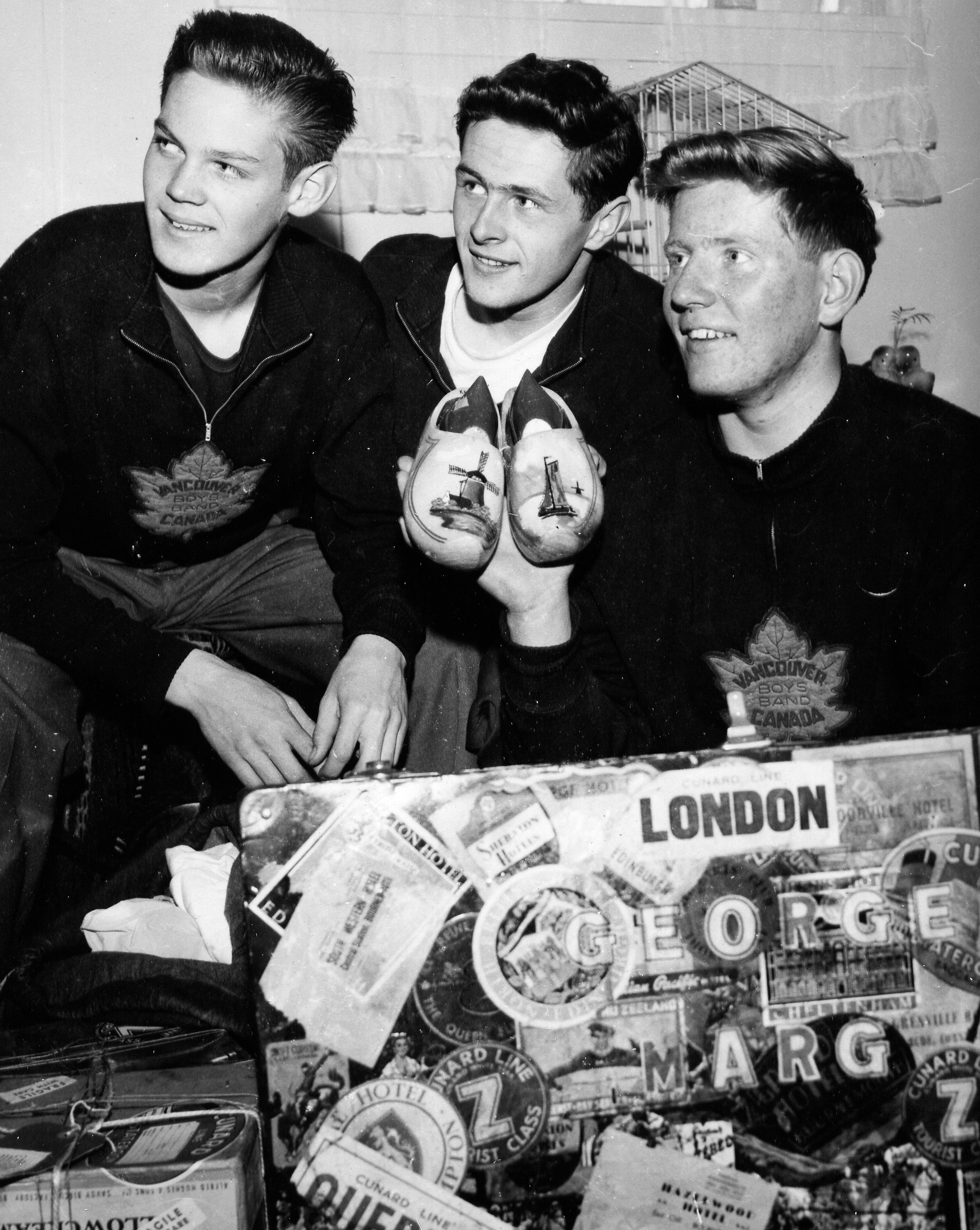
Gordon comes along as manager because Lillie isn’t well. Arthur needs to look after Lillie: the boys take turns keeping her company on the train. Gordon is a bebopper now but Arthur has his hands full with Lillie. He hasn’t got time to worry about Gordon. Gordon wastes no time when they reach London finding an after hour’s club for him and a few of the boys to play jazz. Gordon is in charge of whipping the boys into shape for the Kerkrade Music Festival. He tells the boys when the local butcher has a Mozart score and he is following it while listening to a radio broadcast, you don’t tell him how to play Mozart.
It’s a family affair for Gordon. He has not only brought his wife along but his two daughters fourteen year old Susan and three year old Debra.
Art sees a girl dancing at the Hammersmith Palais in London and they have to meet. She turns out to be Kay, the daughter of Jimmy Coombs, Ted Heath’s bass trombone player. Delamont would lose his mind if he knew his boys were so close to members of a dance band, even if it’s the best in Europe. It seems Art has something else on his mind besides music.
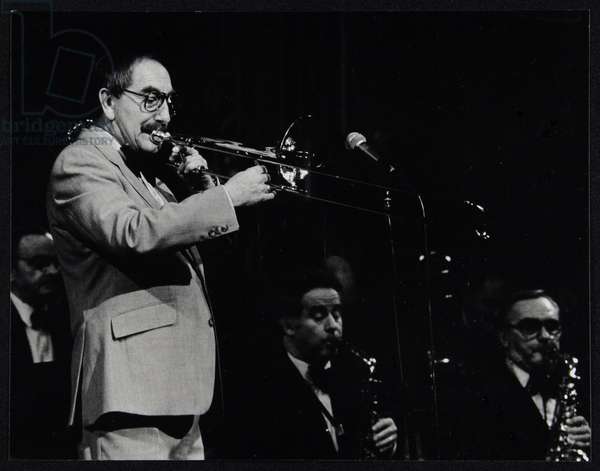
Ted wants to take lessons from Don Lusher, the best trombone player in England. He is also Ted Heath’s lead trombone player. He gets Mr. Lusher’s telephone number and rings him up. After being given the brush off, he goes looking for his house. He isn’t quite sure what his reception will be but he wasn’t too happy on the telephone. He finds his house and rings the bell. When he opens the door, Ted pulls out his trombone, plays a glissando and gets his lesson. He cannot believe how good Ted is for a young boy. Both are happy!
Art hurts his foot on the bus. He has to go to the hospital. He is on his own as the band leaves for their next engagement. He doesn’t know what to do so he telephones Kay. Kay invites him to convalesce at her house. Arts foot gets better and he and Kay get to know each other in the process. The boys hear Arts been going to professional gigs around London with Jimmy. Art tells Arthur his foot still needs to rest and will not be returning to the band until the end of the trip. Tensions rise between Art and the band.
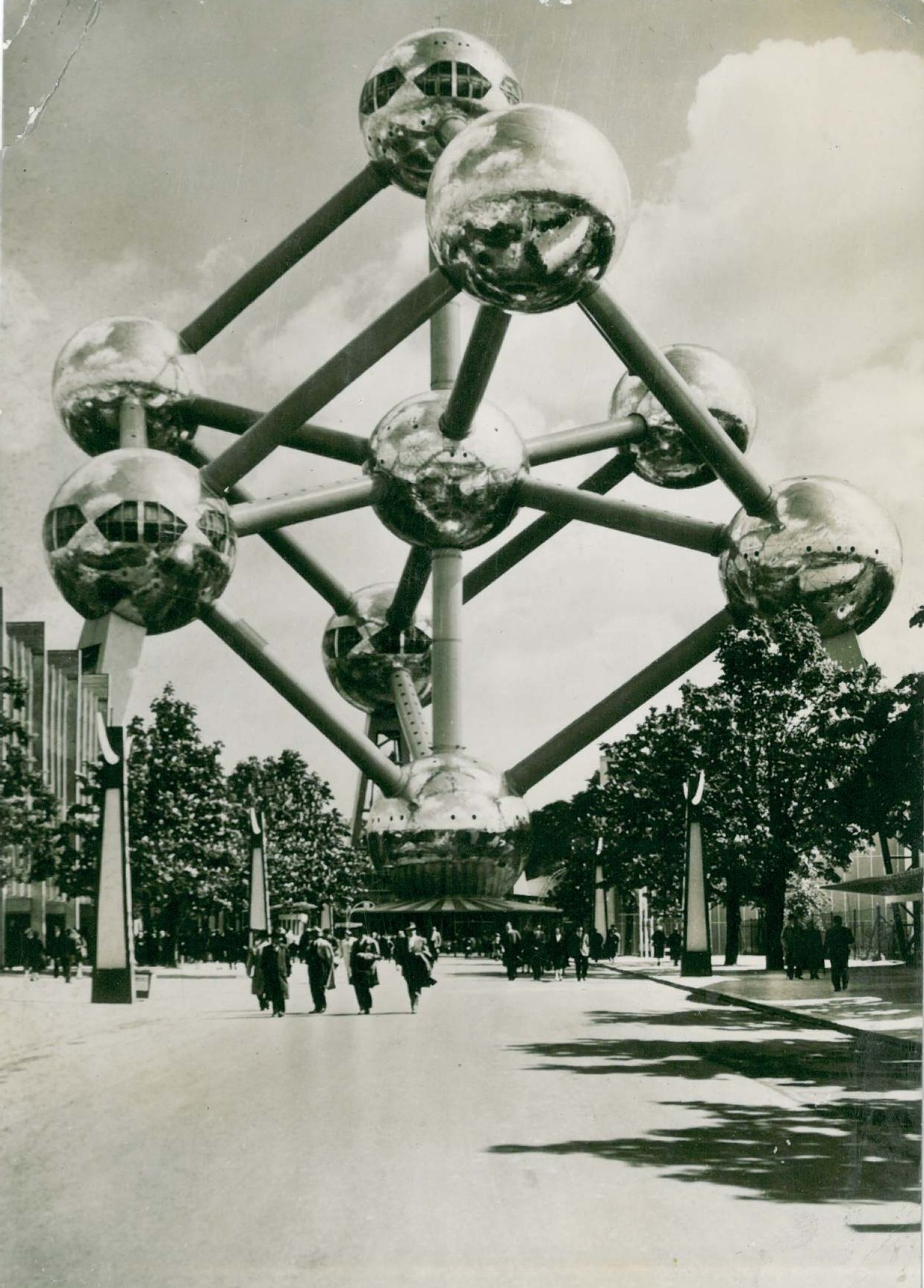
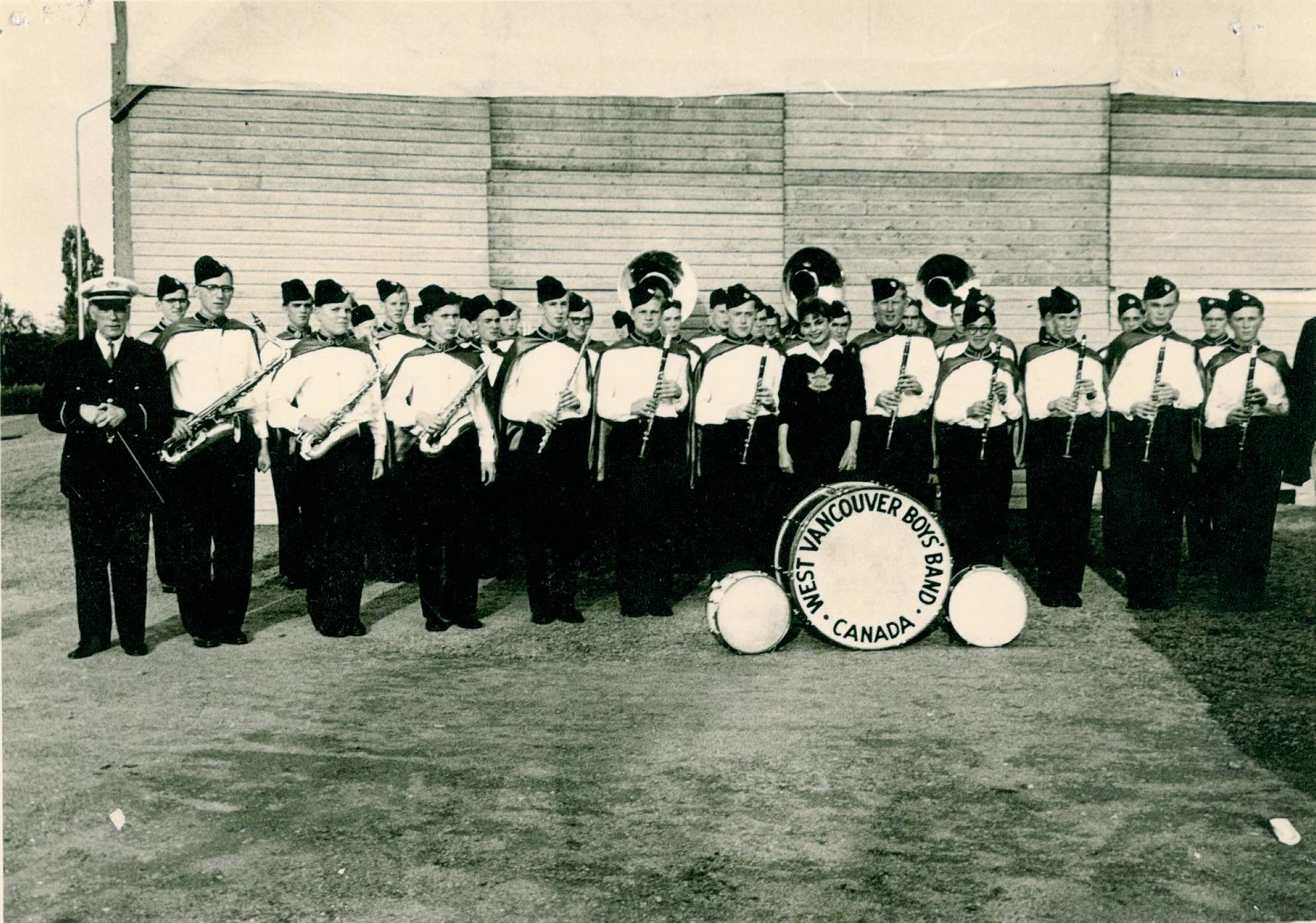
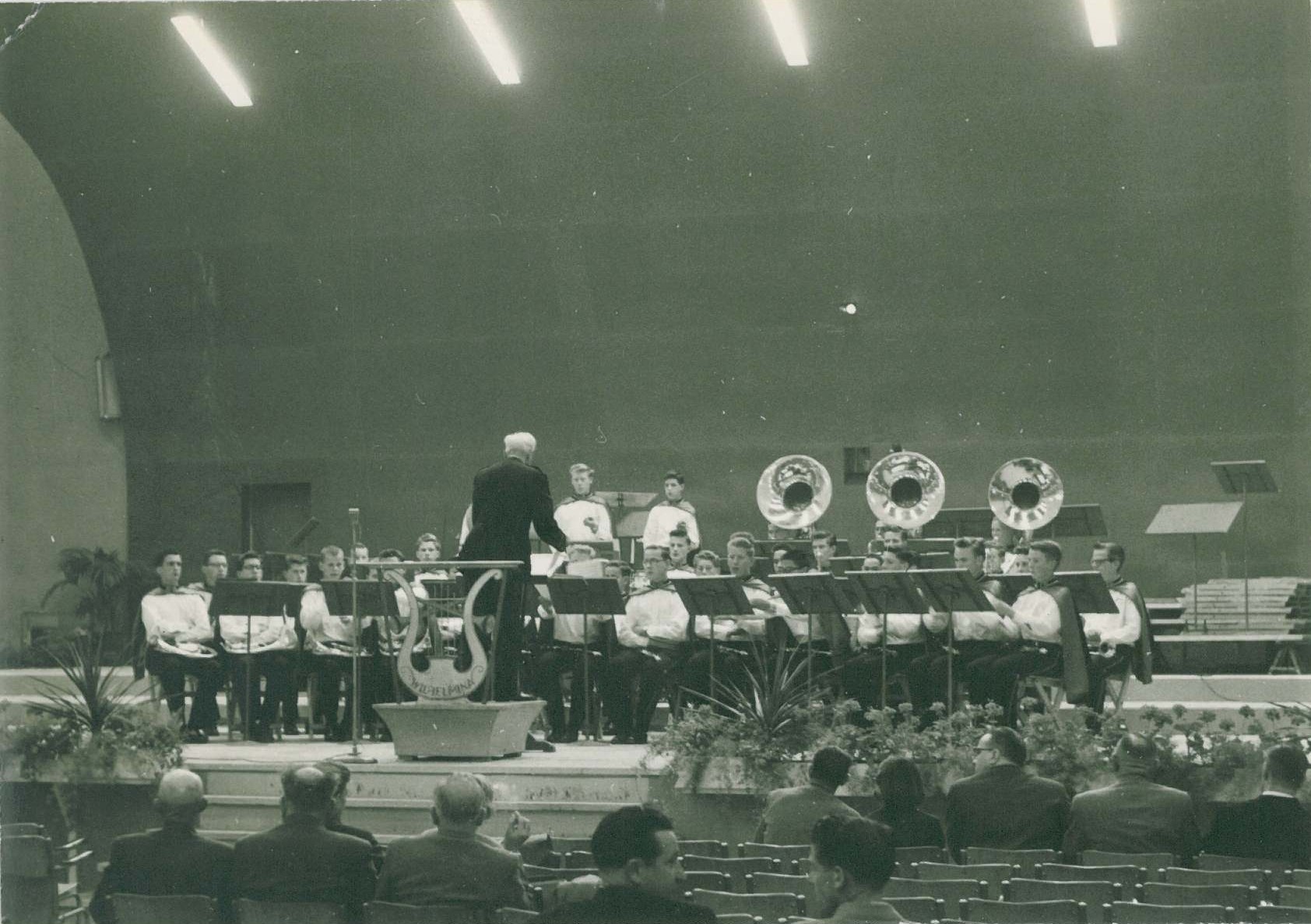
Delamont wants Michael to find him accommodation and places to play in Brussels. Michael uses his contacts at the Department of Trade and Commerce. Delamont meets Michael after Kerkrade and he updates him on Brussels. The boys are all still in heaven after having received 288 out of a possible 300 at Kerkrade. Delamont is happy, the boys are happy and Michael is happy. Even Susan is happy being the only girl amidst forty-seven boys. The wheels are turning in her head. Which one does she like the best.
More excitement as the boys record at BBC studios. Harry Mortimer of the Munn and Felton Band thinks Ted is the best trombone player he has ever heard. He thinks the band is very good. They tour the Boosey & Hawkes factory before heading for Southend-on-Sea.
Two boys are late for a concert in London; so they rent a bicycle. They are riding two on the bike wearing their uniforms and carrying their trombones. A London Bobbie stops them at every block and tells them to walk. They perform on the Ted Heath Show.
When they return, it is discovered General Gordon isn’t paying for this trip but instead the West Vancouver Parent’s Association. Arthur had the boys take the West off their sweaters when they departed Vancouver. The parent’s association isn’t happy with Arthur and tells him so even though he just won double gold at Kerkrade. The successful duo of West Van and Delamont part company.
Quotes from Ambassadors of Empire Season 3, Episode 4:
“If you want to go on this trip you will have to play the bar-i-tone.”
“The boys main competition in Kerkrade was a band made up of professors from the Sorbonne in Paris.”

Newspapers read:
“The boys in dark blue pants with a red stripe, white shirts and dark blue capes lined with scarlet, were veterans. They were on a tour of five countries that lasted 125 days and cost nearly $40,000, and in which they played to the Scots, Germans, and Dutch. They were to travel 30,000 miles, suffer seasickness and homesickness, struggle with strange languages, and unfamiliar food and sleep in strange places, including the basement of a roller-rink with the rumble of wheels overhead. They were often exhausted, laid low by fierce Atlantic storms and bored by long train trips. Moreover their leader was a testy perfectionist who glowered and seemed to sulk at a wrong note, hurled sarcasm at their young heads, and insisted on practice even when all the novelties of Europe were available for the first time to 39 young adventurers. They loved it!”
“A score of 288 out of 300.”
“Ted Lazenby is the best trombone player I ever heard.” Harry Mortimer
“with great zest, assurance and most musically.” Lionel Salter, adjudicator
“Excellent mature playing, Vancouver should be very proud.” William D. Cole. “You produce a very mature sound, you have learned the lesson of good performance and you play that way.”
“Fine attention to dynamics and note values, you are well in tune with nice balance; very fine.” H Smith (Vancouver Sun)
“expressively played, precise and well-tuned chords, tone never gets coarse or uneven.” (Vancouver Sun) Dr. Nelson
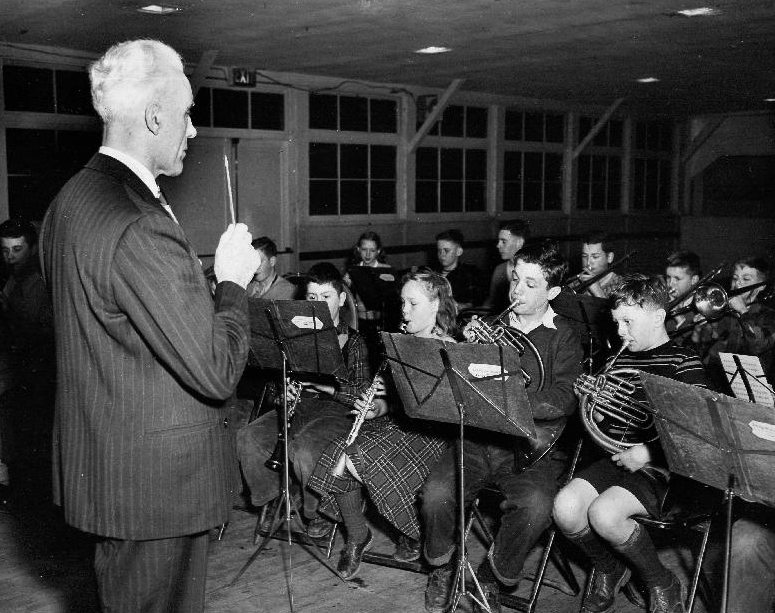
“He had several boys who lived in North Vancouver and had no way of getting across the Lion’s Gate Bridge to Vancouver. Arthur arranged with the boys to meet him on their side of the bridge and he would pick them up. He would come rolling across the bridge around 6:00 p.m., having told the boys to hitchhike in if they had to, which they often did from as far away as Horseshoe Bay. Often he would pick up as many as ten boys in his old Dodge, and the routine was always the same. He would wind down his window before starting off, clear his throat, and then head off across the bridge to Vancouver. Whenever he reached a hill, he would turn off the engine and coast down to save gas. “Old habits are hard to break.” he would say, referring to the hard times of the Hungry Thirties when gas was so expensive.” (Ken Sotvedt 1953,’58, elementary school principal, Director Fireman’s Band)
“Ted Heath was the biggest thing in Europe. The boys were all introduced to him.” Major Peter Erwin, 15th Field Regiment Band
“Sir, I am in England with a boys’ band from Canada, and I wondered if there was any chance of taking some lessons from you while I am here?” Don says, “I don’t talk to kids and I don’t give lessons to kids!”
““What do you want?” Ted says, “I talked to you on the telephone.” Ted has his foot in the door by then and pushes his way inside and says, “I really don’t think there is anyone else in England that can tell me how J.J. Johnson can play this lick. You are the only man who can tell me how to play it!” Ted kicked his case open, pulled out his trombone and played a few notes. The guy says, “Where the hell did you come from? Come in, lad!””“What do you want?” Ted says, “I talked to you on the telephone.” Ted has his foot in the door by then and pushes his way inside and says, “I really don’t think there is anyone else in England that can tell me how J.J. Johnson can play this lick. You are the only man who can tell me how to play it!” Ted kicked his case open, pulled out his trombone and played a few notes. The guy says, “Where the hell did you come from? Come in, lad!”
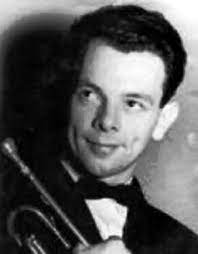
“How do you play like that? Art Tusvik of Bobby Pratt
“I don’t know. I just do it.”
“I thought I really was going to hear how he did it.”
“I do it through brute force and bloody ignorance.” Bobby Pratt, 1st trumpet Ted Heath Orchestra
“Arthur, why don’t you get that horn replated?”
“Gosh, dang, bust it all! I should get my horn re-plated at my age? Why would I do that?”
“Arthur, you should take that horn in and get it re-lacquered!”
“I want the Queen to hear the champions and that it would be a rare opportunity for the boys to attend such a function.” The Honorable Frank Ross, Lieutenant Governor of B.C.
“From what I have heard today I feel we should be sorry we lost you but it is nice you have done so well. I thought the standard of your boys’ performance was excellent, and I congratulate you.” Queen Elizabeth II
 Ambassadors of Empire Online